

WORKSHOP
Know Thyself
You can't move forward if you don't know who you are.
WORKSHOP
Know Thyself
You can't move forward if you don't know who you are.
Knowing oneself is the most profound realization a person can achieve, without a doubt. And yet, most of us have very little knowledge about ourselves.
Of course, we are aware of the colour of our eyes and skin, as well as our abilities, limitations, dreams, and fantasies to some extent.
However, when it comes to more complex yet essential questions, such as how our minds shape our thoughts and reactions, why we think and act the way we do, what motivates our decisions, or why we see things positively or negatively, we usually lack answers.
As humans, we tend to believe that we consciously make decisions, but in reality, we mostly react unconsciously to external and internal stimuli. Life seems great as long as we receive pleasant stimuli.
However, when we encounter unpleasant stimuli, we tend to react negatively, resulting in negative emotional states such as anger, fear, ill-will, jealousy, greed, and possessiveness. We rush through life, bouncing from one stimulus to another, hoping for more pleasure than pain. We swing between attachment and aversion, eventually falling into distress and despair. It is only then that we start to question our way of life and look for ways to experience life to the fullest.
There is some good news, and that is, there is a way you can become more calm, positive, and joyful even when things are not going your way. You can achieve this by following a path that will help you cope with difficult times more effectively.
The very first step of this path is to understand that your life is not determined by what happens to you, but rather, it is determined by how you react to what is happening to you.
Countless individuals suffer at any given moment because they fail to recognize or comprehend this universal truth. Their instinctive responses to stimuli may have led them to jail. Or they lost a partner, job, health, or even their life because they reacted without taking a moment to pause and think about how to respond.
Victor Frankl, an Austrian neurologist, psychiatrist, philosopher and writer, once said:
“Between stimulus and response, there is a space. In that space is our power to choose our response. In our response lies our growth and our freedom."

It is crucial to grasp two fundamental truths at this point:
1. The whole experience of your life, including both happiness and misery, is determined by the gap between stimulus and response. This gap is where your thoughts, behaviour, and mind are formed. It's why all forms of mind exploration and therapy, from ancient practices to modern psychology and psychotherapy, focus on this space in some way.
2. Your outcome in life depends on the time gap between stimulus and response. Acquiring the skill of widening that gap can give you more time to think about what's in your best interest.
It would be great to learn more about this space and how to expand it. Don't you agree?
And that's what we're going to do!
Together, we will explore this space and delve into the intricacies of the mind formation process and learn to identify, understand, broaden and manage it. Along the line, we will discover the path to achieving greater calmness, wisdom, and joy - qualities that will bring numerous benefits to you, your loved ones and society as a whole.
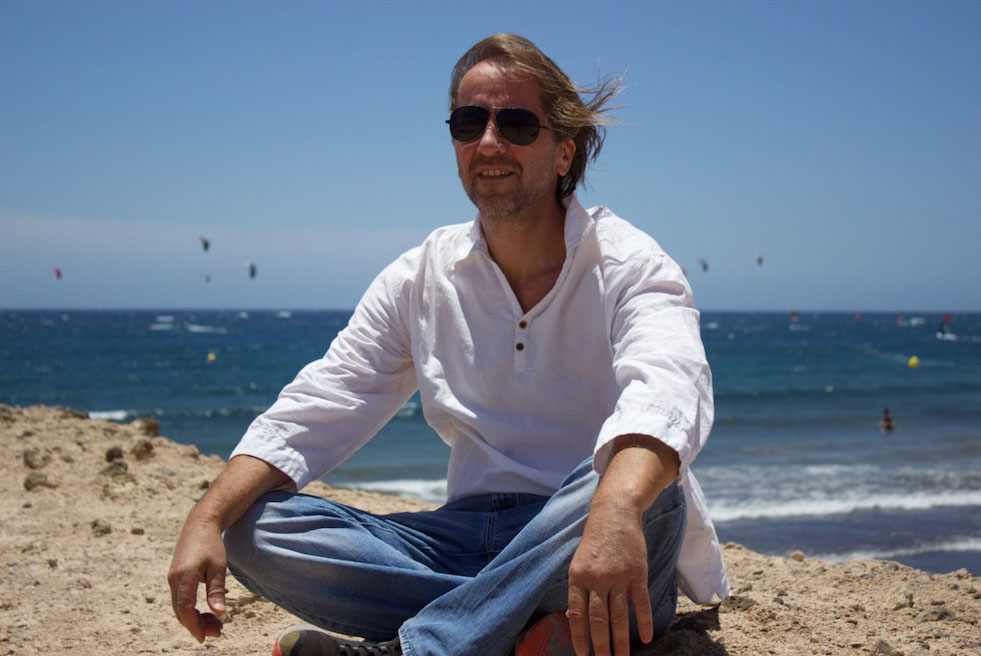
During the event, we will discuss some important concepts and practices that will help you see things more clearly, without the influence of your biases. Additionally, you will learn how to strengthen your mind's ability to resist stress and anxiety, eliminate trauma and other unwanted conditions, and deal with unpleasant situations with more ease.
Participating in this event will allow you to understand yourself better, which in turn will help you accept and appreciate yourself more. By understanding yourself, you will also be able to understand others better, which is fundamental for building better relationships and creating a better society.
But let's put aside all the "mumbos jumbos" and see the event as a form of intellectual entertainment. We won't twist our bodies on the dance floor, but we'll be stretching our minds by discussing one of the most important topics of our existence - who we are.
I promise, this is going to be worth your time!
WELCOME!
And the best part is,it is free!
Of course, doubt immediately arises;
"There is no free lunch! Where is the trick?"
There is no trick. The event was made possible by people who have already acquired this knowledge and want to share it with you.

Benefits of knowing yourself:
Besides, knowing yourself...
- reduces chronic stress and anxiety
- strengthens focus and attention
- Improves efficiency/productivity
- builds up your mindfulness and equanimity
- cleans the old traumas and changes old habit patterns of the mind
- enhances emotional intelligence
- reinforces self-awareness and empathy
- helps manage symptoms of various chronic disease
- helps manage sleep problems
- and more
Here's some additional explanation regarding the benefits of knowing yourself:
(Click on images)
Does it ever happen that one negative event spins you out for the whole day, a week, or more?
Maybe someone cuts you off in traffic, and you react with rage, and within a split second, you are ready to fight regardless of the consequences. Or you lose a file after hours of hard work on the computer, and "the whole world falling apart". Or your teenage daughter doesn't want to listen to your life wisdom, and suddenly, you react angrily and aggressively, too emotionally. And when things like these happen, you begin worrying and ruminating, and you can't get out of the rut...until someone next to you reminds you that you might be overreacting. And when you think about it again, you realise she or he is right, so your anger slowly deflates.
However, somewhere deep in your mind, where you silently rationalise (justify) your reaction, an ember of negative emotions still smouldering, waiting for the next opportunity to flare up.
And if all this rumination and worrying last for a short time, it is bearable. But what if it lasts for days, and all those negative emotions accumulate? They start to affect your mood and physical health. And If this goes on for weeks or months, it becomes a state of being. And, If you live this way for years, it becomes a personality trait often accompanied by chronic stress, anxiety, depression and various physical illnesses.
A desperate but common result. But it doesn't have to be that way! There is a way to strengthen your emotional apparatus and make it more balanced.
Come to the workshop and see for yourself.
...for everyone
We all desire for our children to have healthy physical and mental development. As for the latter, parents or caregivers play a crucial role in ensuring it.
As a parent or caregiver, your primary responsibility is to be a "safe haven" for your child. You need to create a space where your child can always take refuge in case of harsh experiences. If you manage to do so, you will have provided the single most important prerequisite for your child's mental health and overall success. This is far more important than piano lessons or language courses, as per scientific research.
However, being a "safe haven" for your child is not an easy task. We understand how difficult it is to remain aware and calm during challenging times. Sometimes, we react wrongly, and instead of comforting the child, we end up causing them more stress. We may realize our mistake and feel sorry, and if we are lucky, we manage to "repair" our wrongdoing and comfort the child afterwards. But most of the time, we aren't even aware of our mistakes since our reactions come from the unconscious mind, and we only recognize the mistake in retrospect, sometimes even many years later.
Parenting is hard work, and we all make mistakes. This is why it is crucial to acquire and utilize the available knowledge. The technique of self-observation can assist you in mitigating or even eliminating unwanted blind reactions. Better yet, it can help you become calm and joyful, regardless of the situation.
By knowing yourself, you will better understand yourself, and with that, you will also understand your children better. Once this happens, your blind reactivity disappears, and compassion steps in.

...for parents
Objectivity is at the core of our decision-making process. A decision that is not based on objective reality can lead to unwanted outcomes.
Sometimes, we are lucky, and the decision is correct, and we can take pride in our intelligence. However, there are times when we are not so fortunate, and we wonder what made us make that decision. We then try to rationalize or excuse the bad decision, but deep down, we know the truth. Our biased mind misled us and doubt settles in our minds, making future decisions even more challenging.
Contrary to popular belief, decisions are not made solely based on objective analytical data. They are often influenced by subjective perceptions that are biased and influenced by countless factors that we are unaware of, such as what we eat for breakfast or our childhood experiences. We can't do much to change this, as we can't change our ancestors or cultural background.
However, we can improve our decision-making skills by understanding the mind formation process and all its preconditioning issues and biases. It is essential to understand where the wrong conclusions/decisions come from. We must remove the confusion caused by emotions and other influences to see things as they are. When emotions are overactive, our minds are like rough seas, and it is challenging to see things clearly in depth. But when our minds are calm and tranquil, we can see things deepen and more clearly, and we can make quick and correct decisions.
By practising the technique of objective self-observation we'll discuss, you can gain incredible clarity of mind. This will improve your decision-making skills and strengthen your inner peace, which is especially important when deciding on critical issues.

...for decision-makers
Allow me to share my personal story with you.
I was on my way to becoming an elite athlete until I broke my neck during training. It was on my eighteenth birthday. I have had less than five per cent to stay alive or without dire consequences. Happily, I put those few per cent to use, and now, more than thirty-five years later, I am healthy and happy.
It wasn't the best experience of my life. However, it allowed me to tell you a word or two about the trauma such an event can cause you and about how it is when you fall into the abyss of anger and despair after losing everything, including prospects, girlfriend, friends and even a family, not to mention the support of society.
The only thing that kept me going at the time was the thought 'life is beautiful' and the desire for skill to observe it objectively. I wanted to understand why people reacted as they did. I did my best and began to study the human mind extensively. It helped me to avoid self-pity and permanently overcome depression.
Regardless of all the work I put in, the consequences of the trauma crept into my consciousness now and then and returned me to the familiar uncomfortable state of anger and despair for a while. I accepted it as part of my personality. I was convinced that I had done everything in my power until, a few years ago, I came across a mind-training technique that blew my mind. Changes that I didn't believe were possible began to happen.
Of course, it needs hard work and persistence, something an elite athlete understands well. But suddenly, I saw things less fatal, and the tantrums disappeared. And what made me particularly happy was that my closest also noticed the change.
I continued to study the brain and mind and practised regularly for thousands of hours, and all I can say is that I wish I had known this much earlier, especially when I was an active athlete.
Namely, sport is closely associated with rapid ups and downs. Because both depression and anxiety are natural coping mechanisms that "help" us through these ups and downs, they are inevitable in every athlete's life.
A lot more could be said, but why don't you join the event and improve your understanding of yourself and your thoughts and make your mind more stable and trained?
You won't regret it, I promise!
...for athletes
Why does knowing oneself bring such benefits?
Well,
...we will discuss this topic in detail during the workshop, so I don't want to spoil the surprise. But, I can share a small hint with you.
Learning about yourself can change your brain, and you will learn how to do it. In a nutshell, you will become like a brain surgeon, capable of changing and improving your own brain. Isn't that exciting?
More details about the event
Who This Workshop Is For
This workshop is open to anyone who is 16 years old or older. It is highly recommended for individuals with positions of responsibility, parents, and anyone who wants to improve their emotional and mental abilities. The workshop will provide a deeper understanding of human behaviour and the power of mental exercise. Although we discuss complex topics such as stress, the brain, and the mind, we ensure that everyone can understand the content.
Upcoming events
Rules and Requirements
Schedule
The Workshop is quite intensive, so please consider the schedule and be on time, for which we thank you in advance.
Phones, Recording Devices and Cameras
Photography, filming or sound recording is not permitted during the Workshop except with the expressed permission of the presenter. Mobile phones must be on silent mode.
Food, drinks
Eating is not permitted at the Workshop; soft drinks, preferably water, are allowed.
Clothing, equipment
Participants sit on chairs; therefore, no special equipment is necessary.
Intoxicants, alcohol, tobacco
No drugs, alcohol, tobacco or other intoxicants are allowed.
"Who looks outside, dreams; Who looks inside, awakes."
- Carl Jung -

